


Hailed as one of the top rice terraces in China, a visit to Longji was a must on our Chinese travel itinerary.
Because there were a few things we wanted to do in the Guilin/Yangshao area, we decided to go for a tour on this occasion, which included an English speaking guide, transfers and multiple excursions. After a week of self-directed travel, we were excited to lean back and enjoy the ride!
After a longggggg train journey where Zach made a new little pal, we arrived at Guilin North train station.

Our friendly driver Gao, picked us up in a lush car and brought us to our most beautiful and traditional-looking hotel so far, Aroma Teahouse, which was right on Ronghu lake, and near to all the main tourist spots. The teahouse used to be a museum and had many display cabinets featuring old museum relics, broken china (we later found out this is very lucky), sculptures, paintings and a small oriental garden. We were also buzzing that they had a laundry service because frankly the situation was getting a bit desperate…
There is nothing more glorious than fresh, Guilin air-dried undies after a long couple of weeks, I’ll tell you that for free!
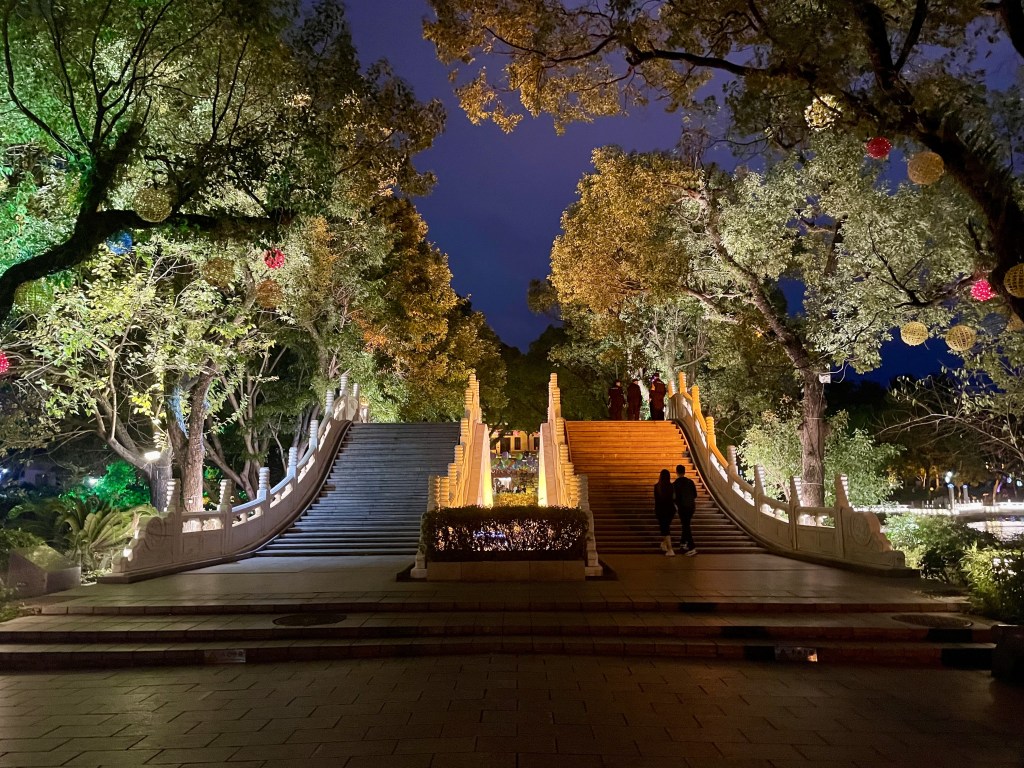
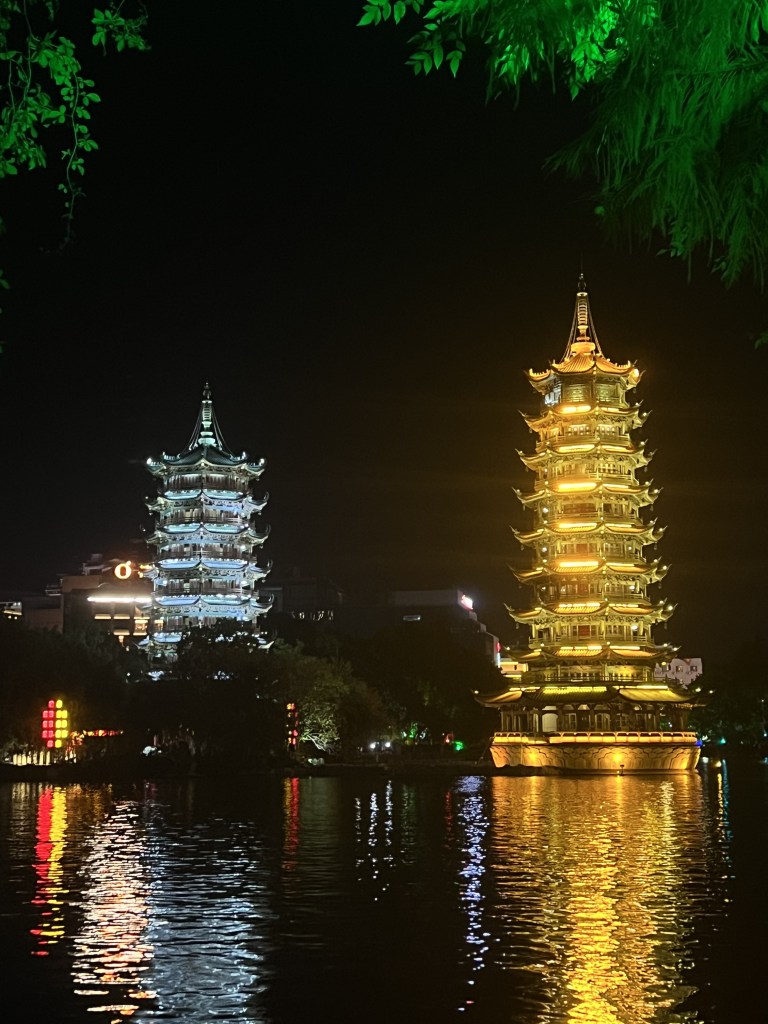
We went for a small mooch around the lake, ending up at the main shopping street. This was probably the most touristy experience we’ve had so far and a bit of a shock to the senses, as live music and dance were being performed in every corner, market stall holders were touting their wares and restaurant owners were dragging you in for a bite – Guilin noodles being the big sell here! More lights, more pagodas (one gold, one silver) and Chinese lanterns lit the way.
A question to the receptionist back at the hotel about the normal business of the area revealed that we had turned up at the start of ‘Golden Week’, a seven-day national holiday where tourism across China peaks. We were lucky to have got a booking apparently! Definitely worth checking this before you book any China travels – it was a really fun energy to be around but prices are inflated and excursions get booked up fast!
Lovely Longji
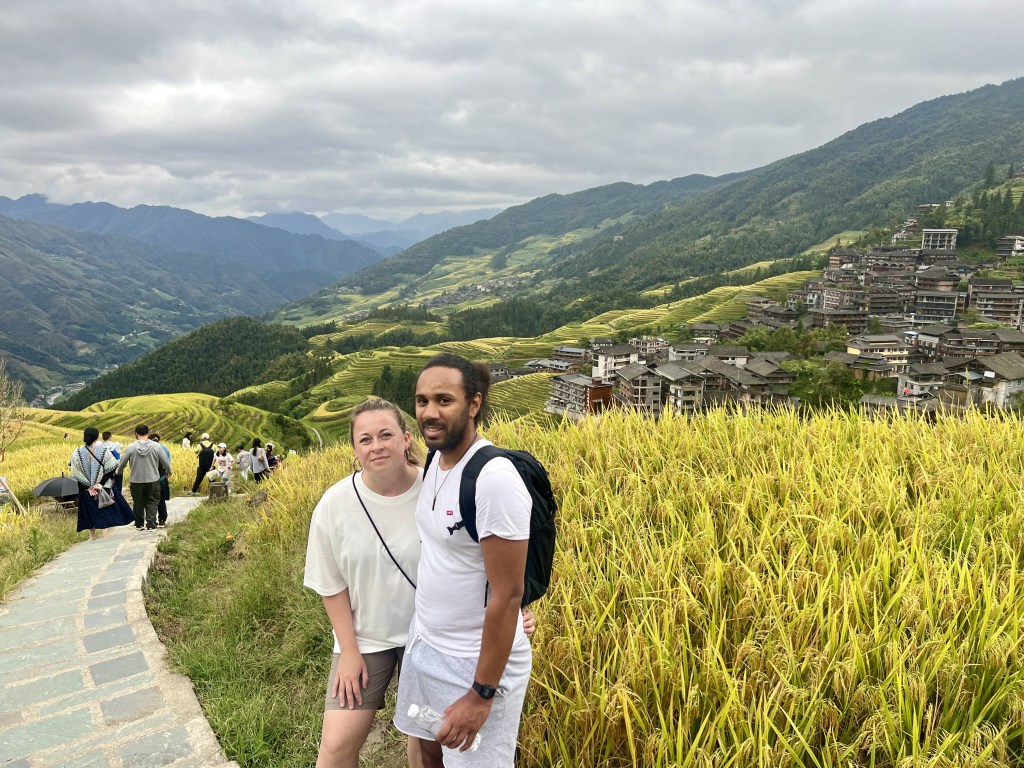
The following morning we were collected at 7.45am (ew), by Gao and our tour guide Henry – a young guy from Guilin who had amazing English & a top notch sense of humour. He’d need it for us, let’s be honest.
First up, a comfortable 2 hour drive to Longji Rice Terraces, which was whiled away with facts about Guilin from Henry. We discovered all about the beloved Osmanthus tree – a yellow flowering tree and the symbol of Guilin (which translates as ‘Osmanthus Forest’). The highly perfumed flower is used in a range of products, from cakes to beauty items, tea to ice cream. We guessed that Zach may have sampled some of the ice cream the day before. There isn’t an ice cream flavour in the world that hasn’t been tasted by the man at this point…
Another famous snack is Guilin noodles – a dry noodle best eaten for breakfast which is why restaurants open from an eye-watering 4.30am in the city. Henry explains that beyond 12pm they become too soggy and the best way to chow down is with river snails, a local delicacy. Naturally my veggie sensibilities weren’t convinced! I was however, more interested in the stories of fruit – the Guangxi region is fondly known as ‘the kingdom of fruit’ and boasts plentiful harvests of passionfruit, mandarins, pomelo and persimmon.

We arrived at the entrance to the terrace hike, weaving stairs cutting through a small village with the obvious addition of a few new hotels. As we climbed – more Chinese leg day – the scale and magic of the terraces became clearer and clearer. It was peaceful, save for the odd whizzing blade of a drone capturing Chinese tourists posing against the yellow and green of the rice crop.

Our first viewing point – one of three – featured the Dragon’s Backbone, a narrow ridge with rice terraces tumbling off either side like the scales of the mythical beast. The Chinese are incredibly imaginative storytellers and their naming of things is the best example of this.

The next point, Seven Stars One Moon, continued the theme with clear peaks forming and a large pool of water among the crop layers. We saw women in the fields laden with baskets on their backs and thick pink hats on their heads… a large beanie if you like. Henry explains these are the Yao people, an ethnic minority group recognised by the People’s Republic of China. The woman are famous for their 2-metre long hair, which is only cut twice in their lifetimes – once at 18 and once just before they get married. Zach felt his 20 years of hair growth was equitable to this feat. Henry thought this was funny and quipped that he’d have to grow his hair to his waist before he was considered eligible for marriage.
The Yao wear black and red, with heavy earrings to stretch the ears – to have long ear lobes like Buddha is considered good luck. The amazing women do the harvesting work, but it is expected that when they return home from the terraces, their husbands run them a bath and rub their feet. Now I love a bath, but the thought of anyone going near my feet after today’s 30,000 steps is frightening.
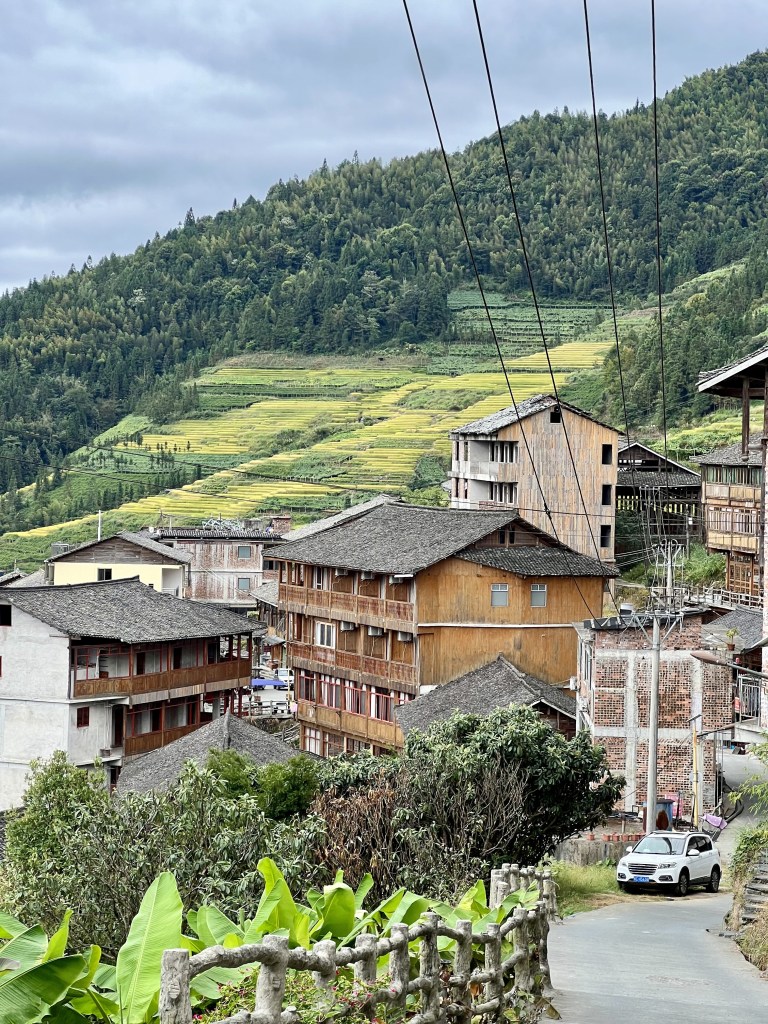
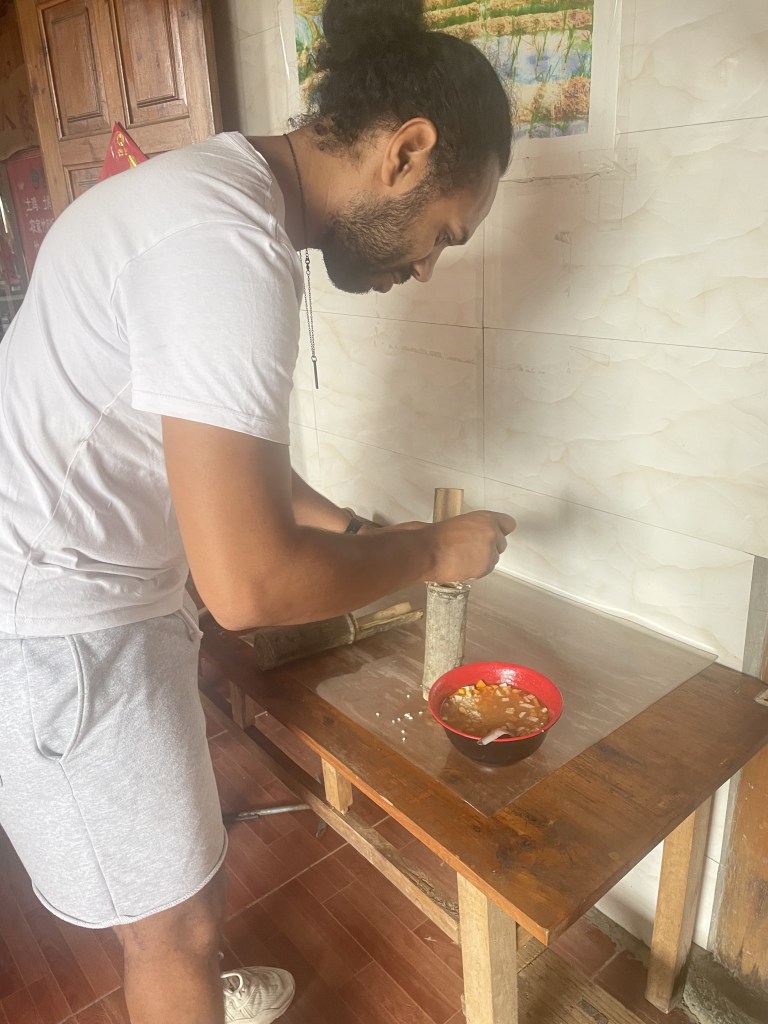
We stopped for lunch in a small village, towards the end of the trek. A friendly Yao lady taught us how to make bamboo sticky rice – rice, veg and sauces stuffed into a section of bamboo and then cooked on an open flame.
While we wait for the rice to cook, Henry takes us to an ancient house in the village, preserved to show passersby how Yao people lived. The rice terraces are around 600 years old, so this simple, traditional home is basic but features all the essentials from a small fire for wood-smoking meat to a giant, foot-operated crusher for rice and grain husking (like a massive pestle & mortar, but harder work).

Post-lunch, Henry walked us down to our final viewing point – Zach’s clear favourite of the hike. We looked up at the cascading terraces, the sheer scale of human endeavour and engineering to create such a thing in such a harsh landscape is breath-taking and beautiful.

Almost certainly our favourite experience so far.
Our 2-day tour continues in the next post!
H&Z x
Links:
Costs: £127.24 for 2 nights + lovely buffet breakfast. The hotel was beautiful and the location was fab – would recommend!
Costs: Around £600 for both of us and included all transfers across 4 days, private guide, lunches, admission for Longji & Li River Cruise, scooters through the countryside at Yangshao. It was a bigger expense but definitely felt worth it by the end of the tour. Gratuities not included.
 The Awkward Travellers
Leave a comment